
You are here
 Plantae (20)
 Asparagales (1)
- Asterales (1)
- Boraginaceae (2)
- Celastrales (2)
- Cucurbitales (1)
- Ericales (3)
- Fabales (2)
- Gentianales (4)
- Icacinaceae (4)
- Lamiales (3)
- Laurales (2)
- Magnoliales (2)
- Malpighiales (16)
- Malvales (2)
- Myrtales (4)
- Oxalidales (1)
- Rosales (3)
- Moraceae (2)
- Rhamnaceae (1)
- Urticaceae (1)
- Santalales (2)
- Sapindales (6)
- Saxifragales (1)

Musanga cecropioides R.Br. ex Tedlie
Nomenclature
-
Family: UrticaceaeGenus: Musanga
Media


SUMMARY
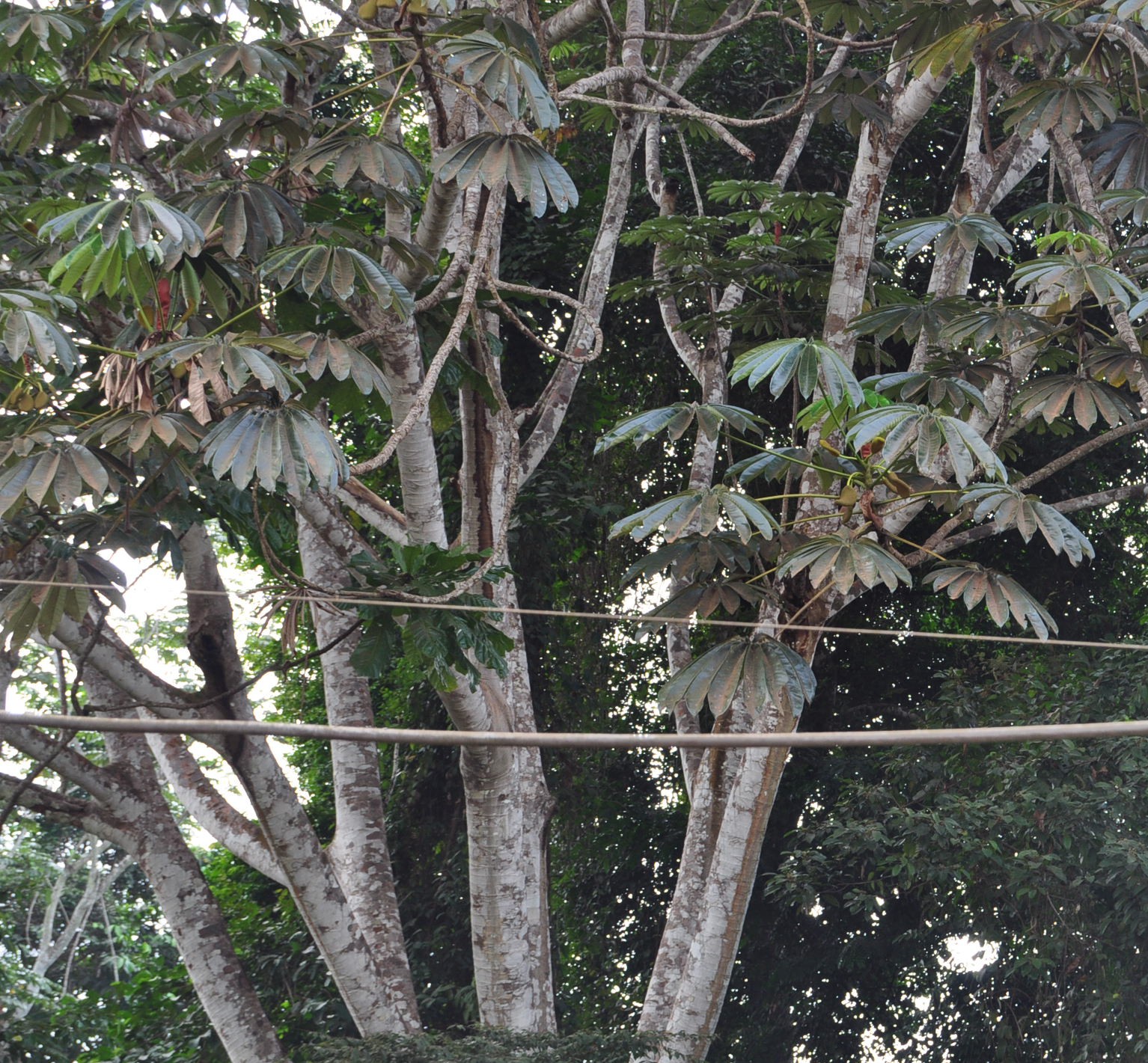
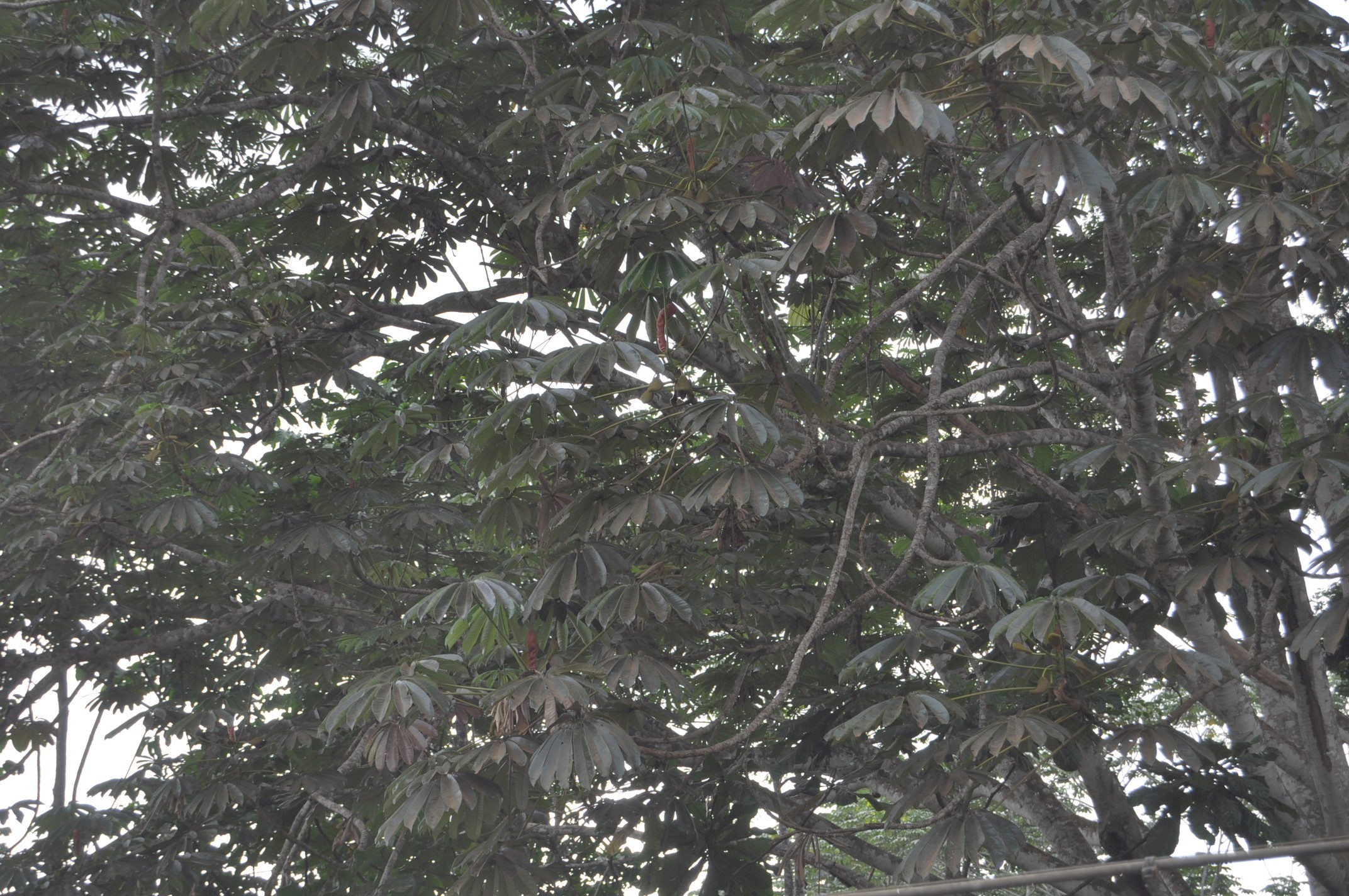
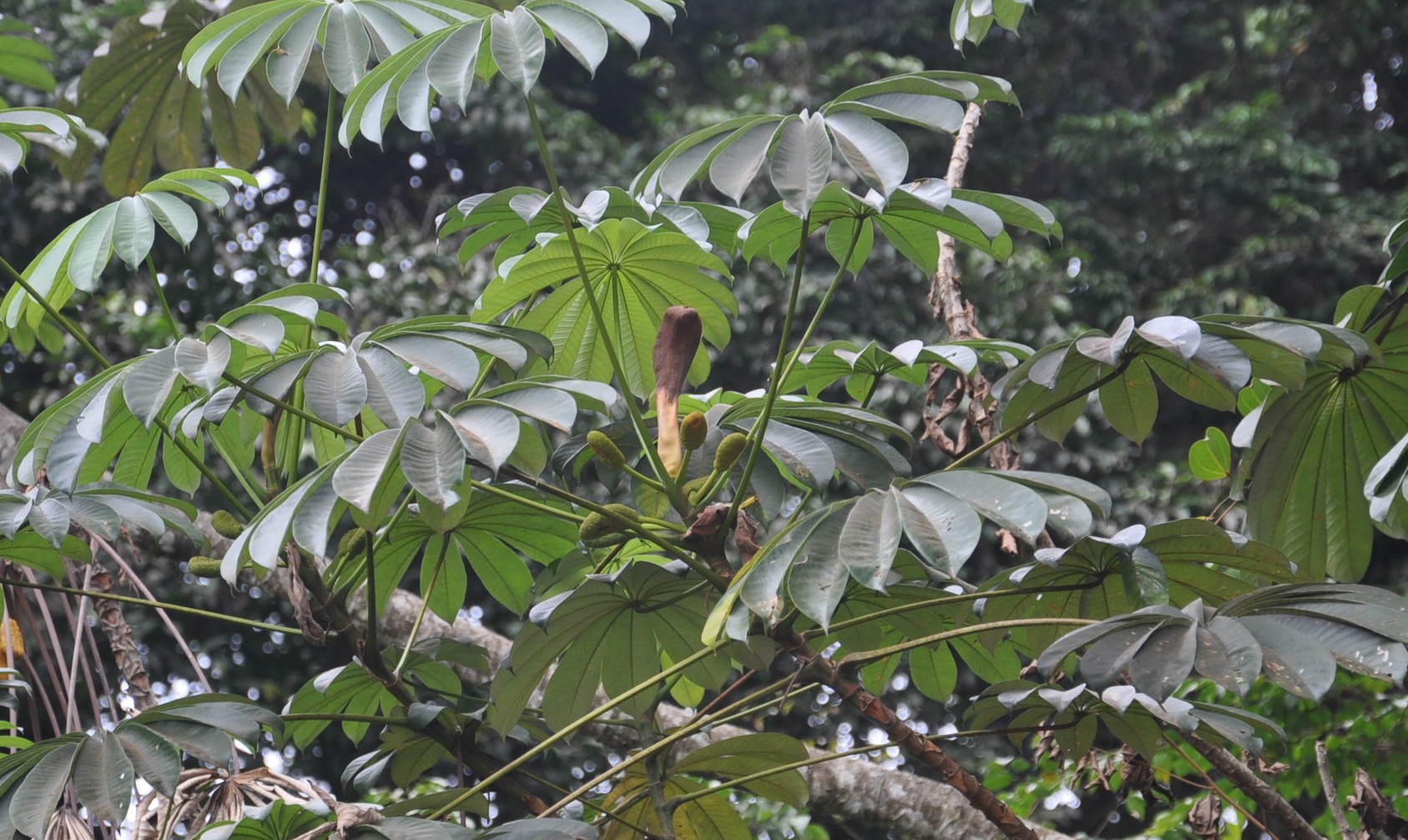
Evergreen straight stemmed tree up to 18 m tall, crown umbrella-like, branchlets stout and pithy producing no latex; stilt roots present, thin and unbranched when young, low and massive when older; bark smooth and grey, slash pinkish or often greenish, thin, very soft, pulpy-granular, brownish on exposure, sometimes spiny. Leaf bud enclosed in large stipular sheaths; leaves digitately divided into 12-15 spreading entire, narrow, shortly acuminate segments, up to 45 cm long, 10 cm broad, covered with greyish indumentum beneath; lateral nerves numerous, very conspicuous beneath; stipules large, connate, 15-20 cm long, densely pubescent. Male trees sympodial in growth; inflorescence terminal, paniculate, leaf opposed, flowers with joined sepals round a single stamen and accompanied by 2 glands. Male flowers in numerous small round heads about 4 mm in diameter, female inflorescence short and club-like, about 2 cm long on a peduncle up to 12 cm long, each flower with a fused calyx, a pistil with a basal ovule and a single style and a pair of glands which secrete substances attractive to ants. Fruit yellowish green, becoming brownish, succulent, up to 8 cm, containing numerous achenes.
Source: http://www.worldagroforestry.org