
You are here
 Plantae (20)
 Asparagales (1)
- Asterales (1)
- Boraginaceae (2)
- Celastrales (2)
- Cucurbitales (1)
- Ericales (3)
- Fabales (2)
- Gentianales (4)
- Icacinaceae (4)
- Lamiales (3)
- Laurales (2)
- Magnoliales (2)
- Malpighiales (16)
- Malvales (2)
- Myrtales (4)
- Oxalidales (1)
- Rosales (3)
- Santalales (2)
- Sapindales (6)
- Anacardiaceae (4)
- Burseraceae (2)
- Meliaceae (6)
- Rutaceae (4)
- Sapindaceae (4)
- Simaroubaceae (1)
- Saxifragales (1)

Dacryodes edulis (G.Don) H.J.Lam
Nomenclature
-
Family: BurseraceaeGenus: Dacryodes


SUMMARY
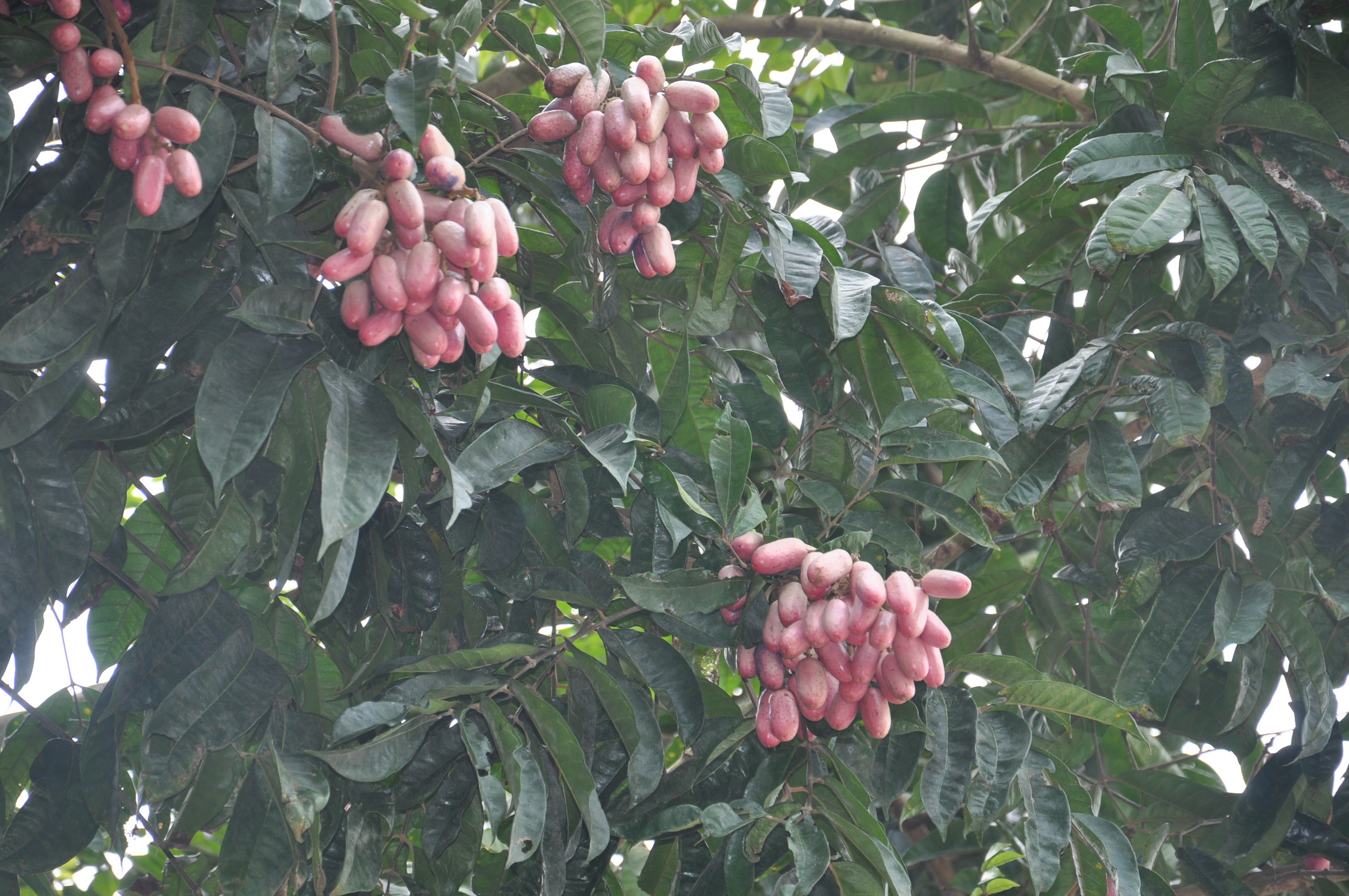
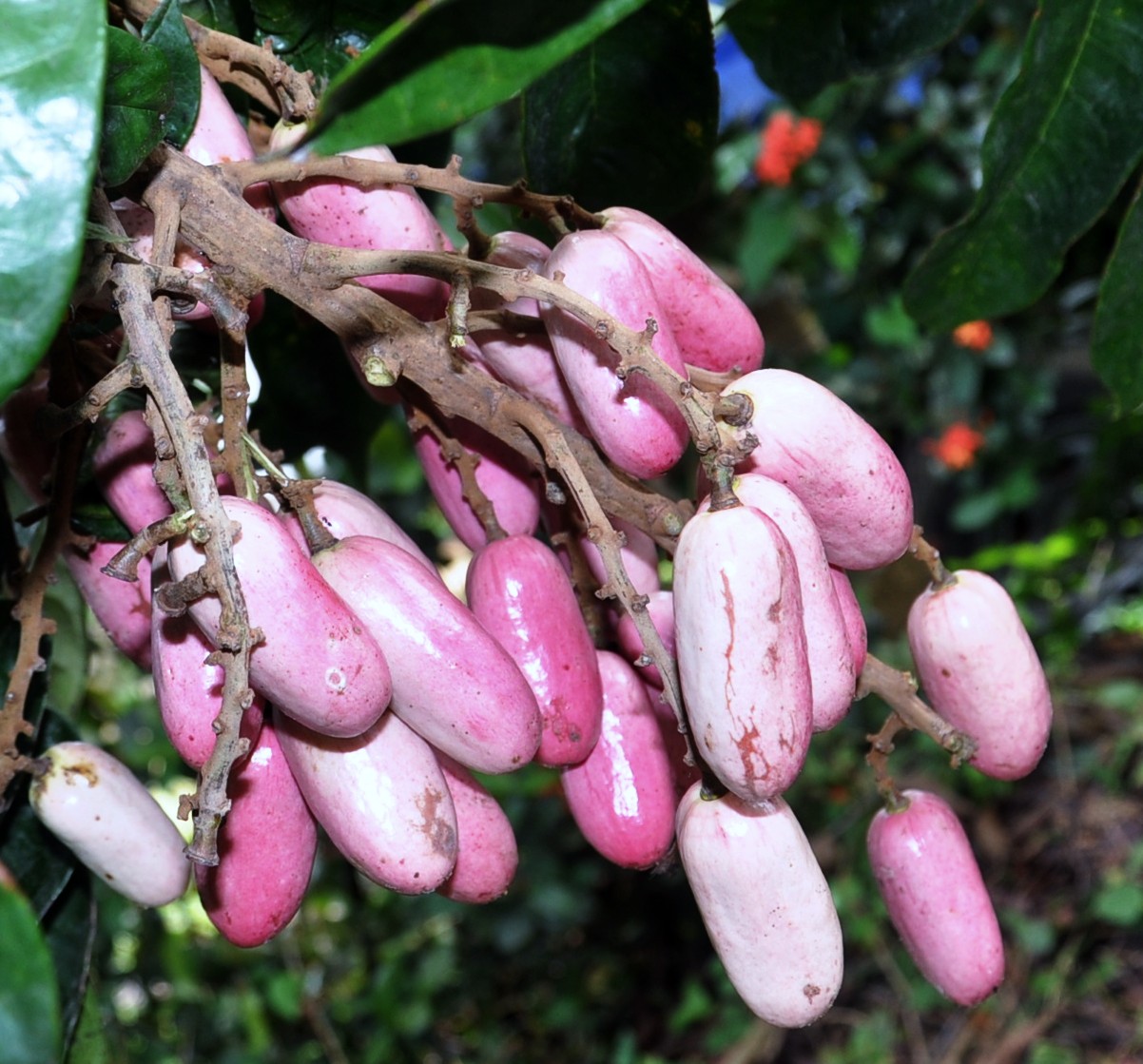
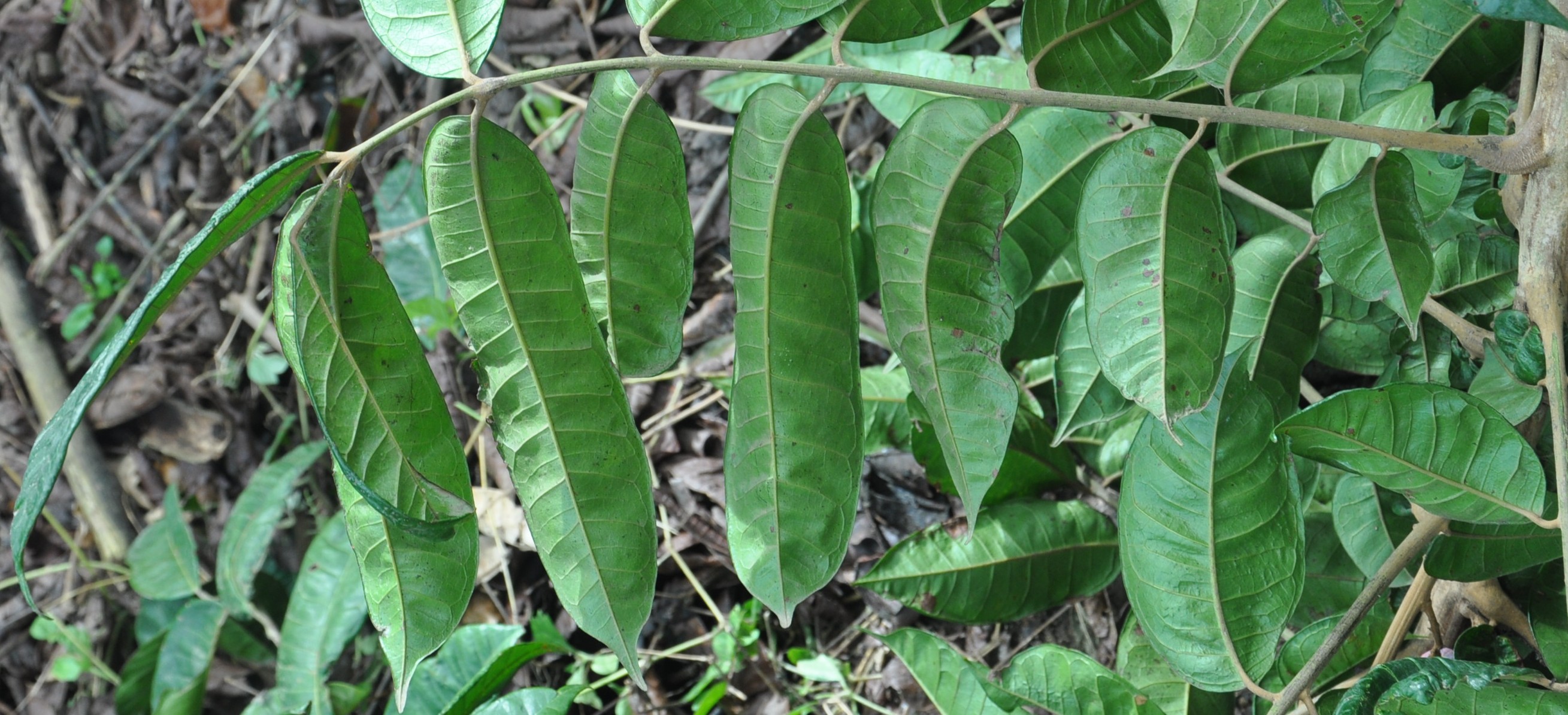
Evergreen tree up to 24 m tall with a much-branched dense crown; trunk shallowly fluted; bark reddish-brown; young branches with a dense indumentum of ferruginous stellate or dendroid hairs. Leaves pinnate; petiole up to 7·5 cm long, sparsely ferruginous-hairy, longitudinally striate; leaflets 5–8-jugate, up to 17 (25) × 6 (8) cm, pairs slightly overlapping as a rule, lamina oblong-lanceolate or, especially towards the petiole, ovate-lanceolate, apex long-acuminate, base often asymmetric, broadly cuneate, rounded or slightly cordate, glabrous above, very sparsely stellate-pubescent or glabrous below, nerves in 10–15 pairs, prominent below, anastomosing well within the margin; petiolules up to 1 cm long. Inflorescences ferruginous-tomentose like the young branches, up to 40 cm long; bracts up to 2 × 0·6 cm, elliptic, carinate; pedicels 1–2 mm long. Calyx c. 3 mm long, lobed nearly to the base, ovate-lanceolate, ferruginous-stellate-tomentellous. Petals c. 5 mm long, with ovate-lanceolate lobes. Stamen-filaments c. 3 mm long in male flowers; anthers ovoid, muticous. Ovary ovoid, glabrous or sometimes pubescent. Fruit bright blue, up to 6 × 3 mm, oblong-ellipsoid.