
You are here
 Plantae (20)
 Asparagales (1)
- Asterales (1)
- Boraginaceae (2)
- Celastrales (2)
- Cucurbitales (1)
- Ericales (3)
- Fabales (2)
- Gentianales (4)
- Icacinaceae (4)
- Lamiales (3)
- Laurales (2)
- Magnoliales (2)
- Malpighiales (16)
- Malvales (2)
- Myrtales (4)
- Oxalidales (1)
- Rosales (3)
- Santalales (2)
- Sapindales (6)
- Saxifragales (1)

Deinbollia unijuga D.W.Thomas
Nomenclature
-
Family: SapindaceaeGenus: Deinbollia



SUMMARY
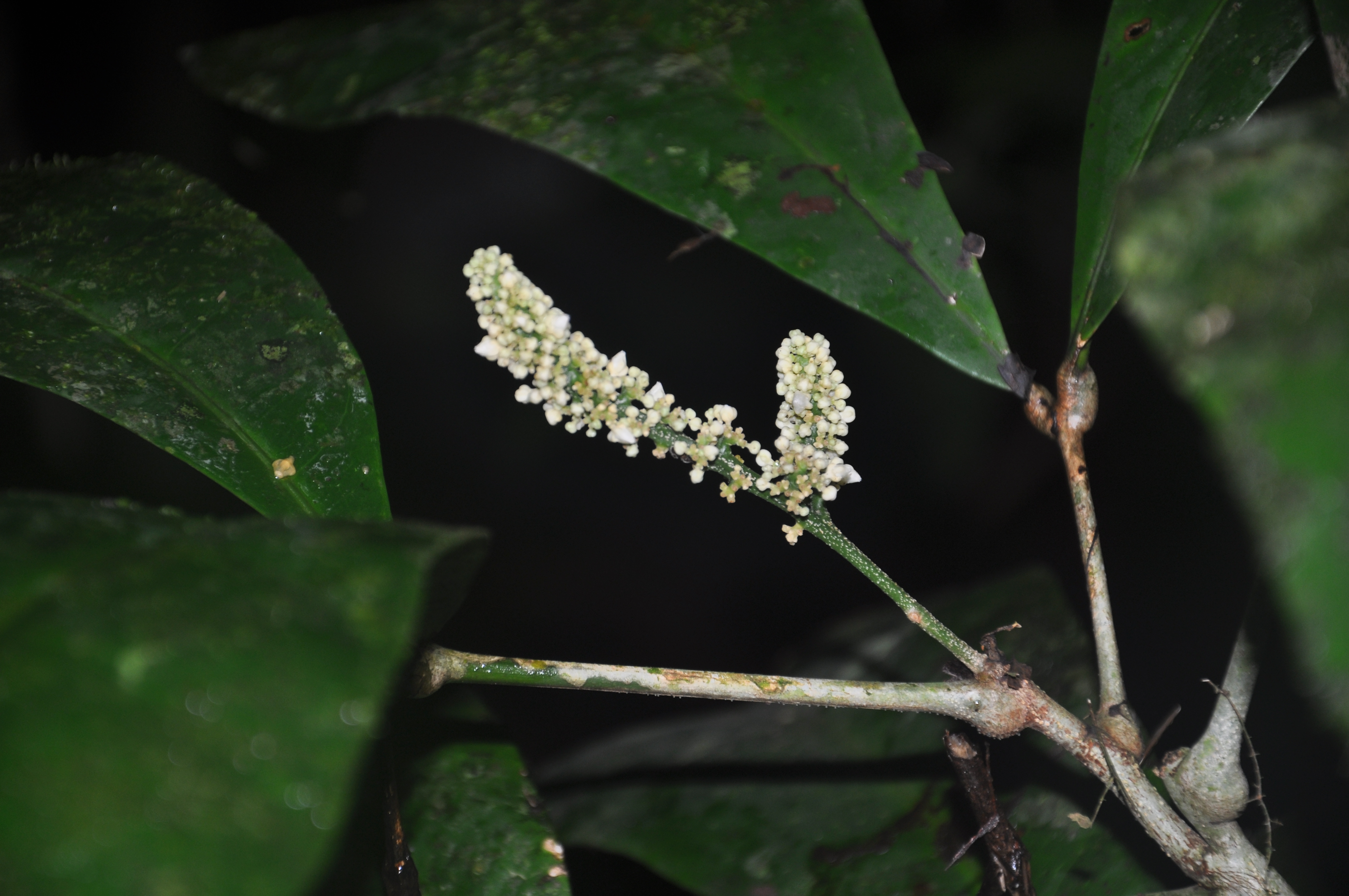
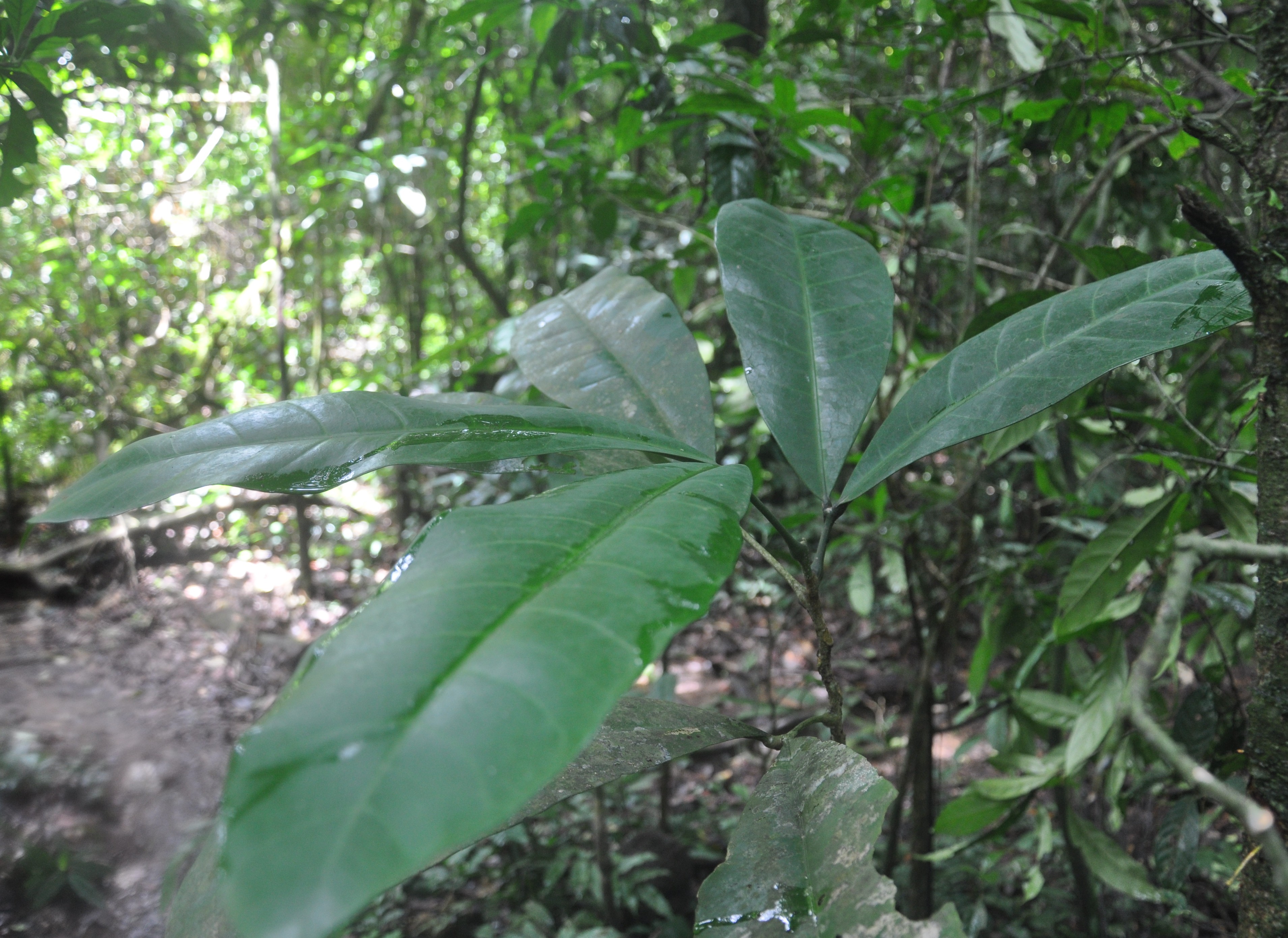
A forest shrub to 3 m tall, though usually less than 1 m, usually unbranched. Leaves few, clus- tered at the branch tips, alternate, compound, glabrous when mature; petioles 1-4 cm long, stout and triangular in section, green when young, with smooth grey bark when mature; petiolule short (to 4 mm) and thick; leaflets 2, opposite, coria- ceous, oblanceolate, 17-50 cm long, 5-14 cm wide, acuminate, base unequal, cuneate to ob- tuse, margin entire, slightly recurved, blades yel- low-green above, paler below, midrib flat above, prominent and keeled below, main lateral nerves 12-18 pairs, looped close to the margin, reticu- late venation prominent on both surfaces, blade yellow-green above, paler below. Inflorescences lateral, borne among the leaves. Panicles stout, to 6 cm long, with few short lateral branches, densely pubescent with short, stout, appressed, pale yellow hairs, cymes short, few-flowered. Bracts 0.5-1 mm, triangular, pedicels 1 mm. Se- pals 5, imbricate, broadly oblong, 2-2.5 mm long, densely pubescent on the surfaces exposed in bud. Petals 5, white, obovate, 2.5 mm long, 2 mm wide, ciliate with a fringed lip within. Stamens 8-12, surrounded by an annulus, filaments pi- lose, 0.8 mm long, anthers 0.8 mm long. Ovary sparsely pubescent, of 2-3 carpels united at the base, style gynobasic, simple. Ripe fruit pale yel- low, of 1 or 2 mericarps, each about 1 cm diam.; mesocarp pale, firm-textured, rather thin, en- docarp not woody; embryos large and green, usu- ally solitary.
Source: Thomas D.W. 1986. Notes on Deinbollia Species from Cameroon. Ann. Missouri Bot. Gard. 73: 219-221.