
You are here
 Plantae (20)
 Asparagales (1)
- Asterales (1)
- Boraginaceae (2)
- Celastrales (2)
- Cucurbitales (1)
- Ericales (3)
- Fabales (2)
- Gentianales (4)
- Icacinaceae (4)
- Lamiales (3)
- Laurales (2)
- Magnoliales (2)
- Malpighiales (16)
- Achariaceae (4)
- Chrysobalanaceae (4)
- Clusiaceae (6)
- Dichapetalaceae (1)
- Erythroxylaceae (1)
- Euphorbiaceae (13)
- Humiriaceae (1)
- Irvingiaceae (3)
- Ochnaceae (2)
- Pandaceae (2)
- Passifloraceae (1)
- Phyllanthaceae (8)
- Antidesma (2)
- Bridelia (2)
- Cleistanthus (1)
- Maesobotrya (3)
- Margaritaria (1)
- Protomegabaria (1)
- Thecacoris (1)
- Uapaca (2)
- Putranjivaceae (2)
- Rhizophoraceae (1)
- Salicaceae (3)
- Violaceae (2)
- Malvales (2)
- Myrtales (4)
- Oxalidales (1)
- Rosales (3)
- Santalales (2)
- Sapindales (6)
- Saxifragales (1)

Antidesma vogelianum Müll.Arg.
Nomenclature
-
Family: PhyllanthaceaeGenus: Antidesma



SUMMARY
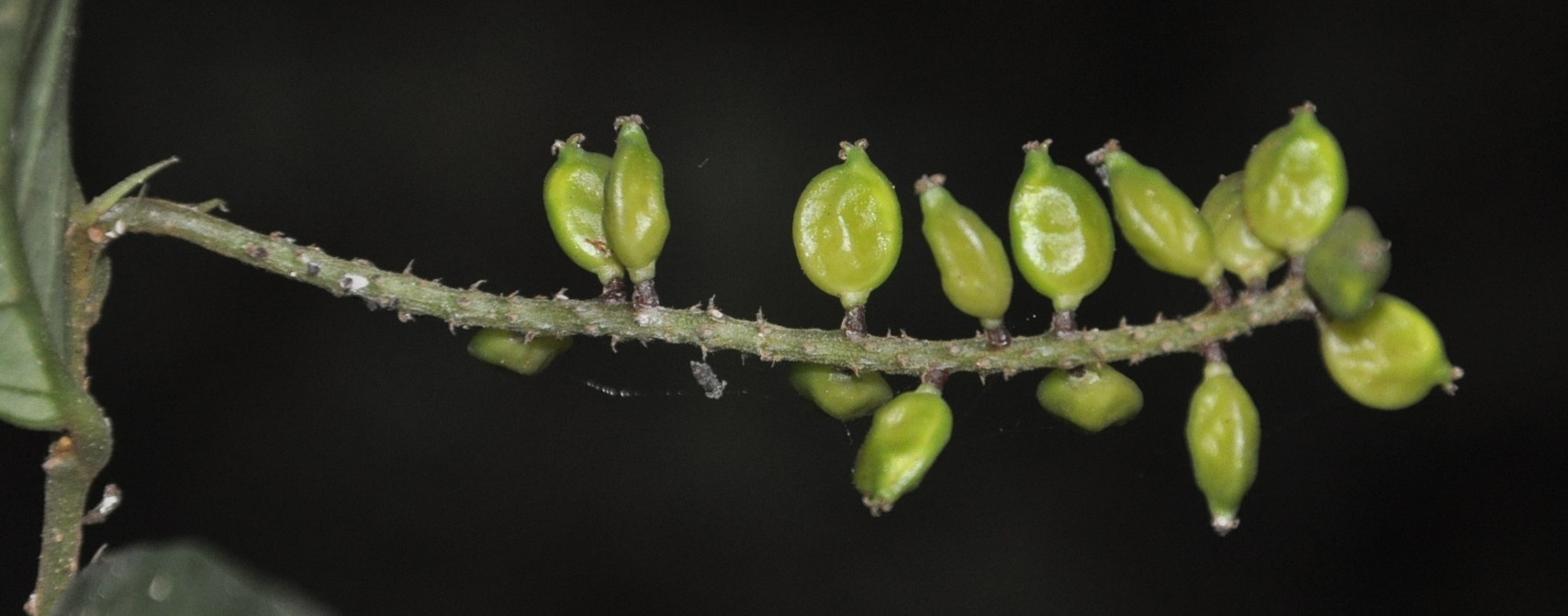
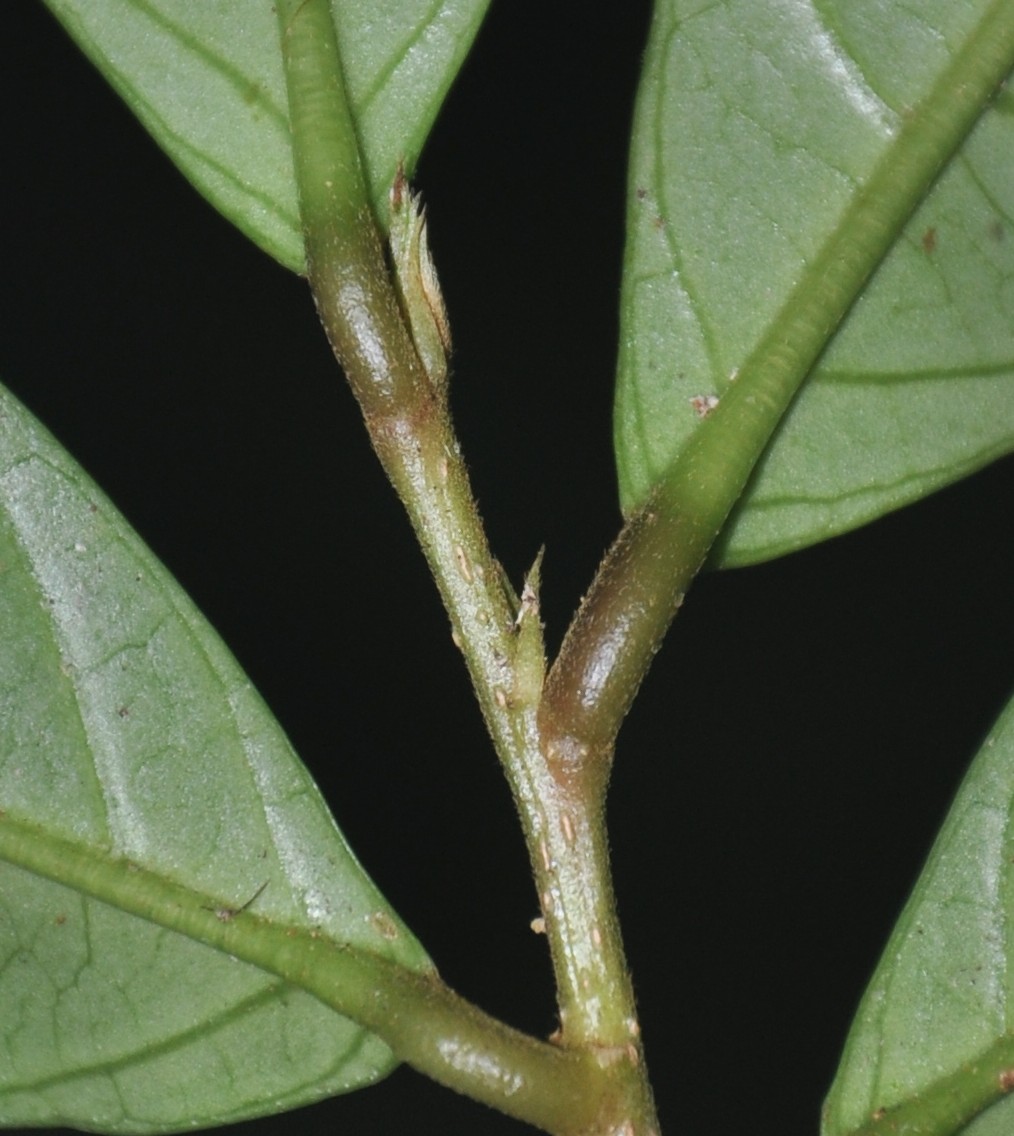
A spreading, sometimes scrambling, evergreen shrub or tree up to 15 m tall, often with only a few long lax drooping branches; bole up to 50 cm in diameter, aerial roots sometimes formed.Bark smooth, longitudinally furrowed, or reticulate and flaking, pale grey or brownish. Wood hard, yellowish-white. Twigs sparingly lenticellate. Young shoots and buds densely ferrugineous-pubescent at first, soon glabrescent. Petioles 2–8(15) mm long, adaxially canaliculate. Leaf blades 3–24 × 1.5–9 cm, elliptic to elliptic-oblanceolate, usually acutely acuminate, often long-acuminate and mucronate at the apex, cuneate-rounded and sometimes slightly asymmetric at the base, coriaceous, glabrous or sometimes the midrib and main nerves pubescent above and beneath, coppery-red when young, becoming deep glossy green above and paler or ferrugineous-tinged with darker green veins beneath; lateral nerves in 5–11 pairs, brochidodromous, not prominent above, somewhat prominent beneath, reticulation lax by reflected light, dense by transmitted light. Stipules 0.4–1.5(3.5) cm × 1–2(4) mm, linear to narrowly elliptic, acute, pubescent, foliaceous on suckers, deciduous or subpersistent. Male inflorescences 3–13 cm long, terminal or subterminal usually on lateral shoots, spicate, often with a lateral basal spike, pendulous; bracts minute, but up to 5 mm long on galled inflorescences. Male flowers: pedicels very short or absent; calyx 3–4-lobed, the lobes 0.5 mm long, subequal, obtuse, glabrous without, pubescent within, ciliate, pale green; disk continuous, thick, enfolding the 3 stamens; filaments 2–2.5 mm long, anthers 0.3 × 0.5 mm, crimson to dark brown; pistillode 1 mm tall, cylindric, scarcely 2–3-lobed at the apex, glabrous. Female inflorescences 1–8 cm long, extending to up to 17 cm long (much longer in W Africa and Zaire) in fruit, pendulous, unbranched, not galled, otherwise as in male. Female flowers: pedicels 0.5–1 mm long, extending to up to 4 mm long in fruit; calyx 1 × 1 mm, squarely cupular, truncate or very shallowly and broadly 3(4–5)-lobed to one-third, otherwise ± as in the male; disk c. 1 mm in diameter, annular, entire or crenellate; ovary 2 × 1 mm, fusiform-ellipsoid, smooth, glabrous, brown; styles 3–4, usually terminal, 1 mm long, strongly recurved, usually glabrous. Fruits (6)7–9(10) × (4)5–7.5 mm when dried, 8–10(12) × 5–8 mm when fresh, ellipsoid, slightly asymmetrical, strongly compressed, irregularly and coarsely foveolate when dried, glabrous, shiny, olive-green at first, turning through whitish to red, reddish-yellow, brownish-pink, purple or black when ripe, very juicy. Seeds 6 × 3 × 1 mm, ellipsoid, often aborted